
Tooth Extraction in Norcross, GA
Shakespeare’s Romeo and Juliet gave us the phrase “parting is such sweet sorrow,” a line that captures the difficulty of saying goodbye even when separation must occur. That sense of reluctance often appears when a tooth needs to be removed. Losing a natural tooth is never ideal, but extraction can bring an end to pain or infection once other treatments are no longer effective.
A dental extraction is not a first-line recommendation. It becomes part of the discussion only after decay, gum disease, trauma, or impaction has progressed beyond what conservative care can predictably manage. In those situations, removal serves a clear clinical purpose: stopping the source of the problem and allowing healing to begin.
Understanding Tooth Extractions
There are several signs you may notice that suggest a tooth should be evaluated for possible removal. These symptoms do not automatically mean an extraction is required, but they do signal that something is no longer functioning as it should.
When a tooth can be repaired, treatments such as fillings or dental crowns are always considered first. Extraction enters the picture only when a tooth is too damaged, infected, or obstructed to be saved predictably.
You may notice:
- Persistent tooth pain that does not improve
- Pain or discomfort when chewing or biting
- Swollen, tender, or irritated gum tissue
- Jaw pain, soreness, or stiffness near a specific tooth
When a tooth is severely decayed or infected, extraction can provide significant relief by removing the source of pain and limiting bacterial spread to surrounding teeth and tissue. In some cases, timely removal also helps prevent more complex problems from developing later.
Types of Tooth Extractions
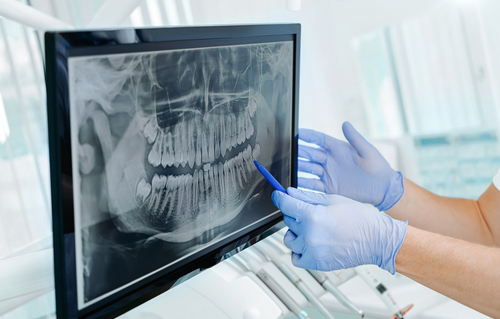
Dental extractions fall into two categories: simple and surgical. The type of procedure is based on the ease of access to the target tooth.
Dr. Stingley uses a simple extraction when a tooth sits above the gum line and can be accessed easily. First, she numbs the area around the tooth with a local anesthetic, then gently loosens and removes the tooth using dental instruments designed for this purpose. Most patients experience a smooth recovery with minimal discomfort.
Dr. Stingley performs a surgical extraction when a tooth is impacted, partially erupted, or otherwise inaccessible through a simple extraction. She uses a precise approach to reach and remove the tooth while protecting the surrounding tissue. Since this procedure involves more work around the tooth, recovery may take longer and include mild swelling or discomfort.
Replacing an extracted tooth promptly is important. Missing teeth can affect chewing and speech, allow surrounding teeth to shift, and increase the risk of infection. When a tooth root is lost, the jawbone in that area may weaken over time, which can affect facial structure and limit future treatment options.
For this reason, Dr. Stingley discusses tooth replacement options as part of the extraction planning process. One of the more beneficial options is mini dental implants. Mini implants can support a single tooth, multiple teeth, or a full-arch replacement. In many cases, these implants can be placed at the time of extraction to support bone health and simplify care.
Why Do I Need a Tooth Extraction?
Preserving a natural tooth is almost always preferable to replacing it, which is why removal is avoided whenever a tooth can be maintained without compromising your health. An extraction is recommended only when retaining the tooth would pose an ongoing risk, cause discomfort, or result in instability.
Dr. Stingley may recommend a dental extraction when a tooth:
- Cannot be predictably restored due to advanced decay or structural damage
- Has lost support because of advanced gum disease
- Has been fractured or damaged by trauma beyond repair
- Remains impacted beneath the gums and interferes with surrounding teeth
- Contributes to crowding, bite problems, or jaw strain that cannot be corrected conservatively
- Interferes with normal eruption or alignment, including cases where an extra tooth has formed between the two upper front teeth
- Must be removed as part of preparation for implant-supported restorations
Dr. Stingley evaluates the condition of the tooth, the surrounding bone and gum tissue, and how removal fits into your overall treatment plan. The goal is always to resolve the problem at its source while preserving as much natural structure and function as possible.
Sedation Options for Your Tooth Extraction
At your free screening, Dr. Stingley reviews your exam and imaging, explains her findings, and discusses the type of extraction that fits your needs. The discussion then turns to comfort. Dental anxiety is common, and for many people, it relates to the dental environment as a whole, not only extractions.
At Carter-Rockbridge General Dentistry, we believe trust is the first step in reducing dental anxiety. Dr. Stingley and our team take time to build relationships, explain each part of treatment clearly, and set expectations before anything begins. Often, fear comes from uncertainty, and we encourage questions so nothing feels unclear or rushed.
In some cases, additional support can make treatment more comfortable. We offer oral conscious sedation and nitrous oxide as sedation options for patients who would benefit from extra relaxation. First, there is oral conscious sedation, in which you take a prescribed medication before your appointment.
Nitrous oxide, often called laughing gas, is inhaled through a small nose mask during treatment and provides a lighter, calming sensation that wears off quickly once the gas is stopped.
Start Your Treatment Plan Today
When tooth pain, decay, or damage becomes severe, a dental extraction can bring relief and support better oral health. At Carter-Rockbridge General Dentistry, we focus on thoughtful treatment planning and dependable tooth replacement options, including mini dental implants. Dr. Stingley and our team approach every situation with care, experience, and a clear understanding that no two patients face the same circumstances.
If tooth pain has progressed to the point where extraction may be necessary, we invite you to schedule a free screening. We will review your options, explain the next steps, and help you develop a plan that restores comfort and protects your long-term oral health.
Frequently Asked Questions
A dry socket is a complication that can occur after a tooth extraction if the protective blood clot in the socket is lost too early or does not form properly. When this happens, the underlying bone and nerve endings are exposed, which can cause intense, throbbing pain.
Symptoms typically begin one to three days after the extraction and may radiate to the ear, temple, or neck. If you suspect a dry socket, contact our office right away so we can clean the area, apply medication, and help control the discomfort.
Despite how extractions are often portrayed, the procedure itself is usually far more manageable than people expect. Dr. Stingley uses careful technique, appropriate anesthesia, and a patient-focused approach to comfort throughout the appointment.
Most patients feel pressure rather than pain during the procedure, and many are surprised by how little discomfort they experience afterward. With proper planning and aftercare, tooth extraction does not need to be a painful experience.
You may need your wisdom teeth removed if you notice pain, swelling, or repeated infection in the back of your mouth. Dr. Stingley may also recommend removal if X-rays show that the teeth are impacted or pressing against nearby teeth. If your wisdom teeth are coming in straight and fully visible, removal is not always necessary. Being able to keep them clean helps guide that decision.
However, if decay develops or daily cleaning becomes difficult, Dr. Stingley may still recommend removal. Wisdom teeth sit far back in the mouth. That location often makes them harder to clean and more likely to break down over time. Teeth that grow in at an angle, remain partially trapped beneath the gums, or never fully erupt, tend to cause problems.
Related Videos
- Types of Extractions We Perform
- Can I Get a Dental Implant the Same Time a Tooth Is Extracted?
- Do You Remove Wisdom Teeth?
- Dental Conditions That Must Be Treated Before Oral Surgery
- Sedation Dentistry Options
- Why Is It Important to Replace Missing Teeth?
- What Is a Dental Implant?
- What Is a Mini Dental Implant?
- What Are the Advantages of One-Piece Implants?
- What If I Dont Have Enough Bone for a Dental Implant?
- Is Bone Grafting Required for Mini Dental Implants?
- Who Is a Candidate for Mini Dental Implants?
- How Long Does It Take to Get a Mini Dental Implant?
- The Mini Dental Implant Process