

Gum Disease Treatment in Norcross, GA
Good dentistry begins with healthy gums! Dr. Stingley built this practice on the belief that healthy gums are the foundation of everything else we do, so that’s where we focus first. Gum disease often starts subtly, but left alone, it can lead to serious issues like bone loss and tooth mobility. That’s why we pay close attention, even during routine visits. And if you need gum disease treatment, we don’t just offer a standard fix. We’ve invested in technology like the Waterlase dental laser, which lets us target infection more precisely and with far less discomfort than traditional tools.
Our goal is to stop the disease, protect what’s still healthy, and give your gums the support they need to heal. We’ll talk with you, show you what we see, and make a plan together. You’ll know what’s happening and why because we don’t believe in rushing, guessing, or keeping you in the dark.
What Is Gum Disease and Why Does It Require Treatment?
Healthy gums (what we call normal gingiva) aren’t inflamed or irritated. You can gently clean the gum pocket, or sulcus, and it won’t hurt. But when plaque builds up, that’s when the trouble starts. Plaque is full of bacteria, and when it sits too long, the body steps in to help. Red blood cells rush to the area to try and wash away the buildup, which is why inflamed gums—known as gingivitis—bleed easily. The body is doing its best to clean the mouth, but it can’t keep up on its own.
Once the bacteria settle in, it’s like they’ve found a home. They start repopulating and forming a little community. As Dr. Stingley puts it, “They’re having a party in your mouth.” And like us, they eat and use the bathroom, and when they do, they release toxins. These bacterial wastes are what cause inflammation and damage.
If things go too far, brushing alone might not be enough to reverse damage. You’ll need more targeted treatment to get the infection under control.
How Gum Disease Progresses
Over time, the toxins released by bacteria in plaque can start to break down your gum tissue and the bone that holds your teeth in place. What starts as bleeding or irritation can lead to gum recession, loose teeth, and eventually, tooth loss. The earlier we catch it, the easier it is to manage the infection.
Stage 1: Gingivitis
This is the first sign your gums need attention. They may bleed when you brush, look puffy, or feel a little sore. Your breath might also start to change. At this stage, your body is trying to fight the infection, but it needs your help. With proper brushing, flossing, saltwater rinses, and a good cleaning, we can usually get things under control fast.
Stage 2: Early Periodontitis
Now the infection has started to affect the bone. You might notice your gums pulling back or bleeding more often. Things won’t improve with home care alone. You’ll need a deep cleaning to remove bacteria under the gumline and prevent them from spreading. With the right treatment and follow-up at home, we can still prevent more damage.
Stage 3: Moderate to Advanced Periodontitis
At this point, the disease has caused real harm. You may feel your teeth shifting, see deep pockets between the teeth and gums, or notice changes in your bite. Treatment here is about damage control. We may use laser therapy, antibiotics, or other treatments to clear the infection and help your mouth recover. The earlier we act, the better your outcome!
Gum Disease Treatment Options
When gum disease sets in, we have more than one way to treat it. We don’t jump straight to surgery. We start with what makes the most sense for your mouth, and we always explain your options so you can make an informed decision.
Scaling and Root Planing (Deep Cleaning)
Our first step is often a deep cleaning, called scaling and root planing. We go below the gumline to clean out the bacteria and buildup that regular brushing can’t reach. Then we smooth the root surfaces so the gums can reattach and start healing. It’s thorough, and it gives your mouth a fresh start.
Antibiotics
If the infection is deeper or more aggressive, we may use antibiotics to help clear it up. These can be taken by mouth or placed directly in the gum pockets. With antibiotics, always continue using the medication as prescribed, even if you start feeling better!
Medicated Rinses
We sometimes recommend a prescription rinse to help reduce bacteria and inflammation after treatment. It’s a simple way to keep things clean while your gums heal. If it’s right for you, we’ll explain how and when you should use it.
Laser Therapy
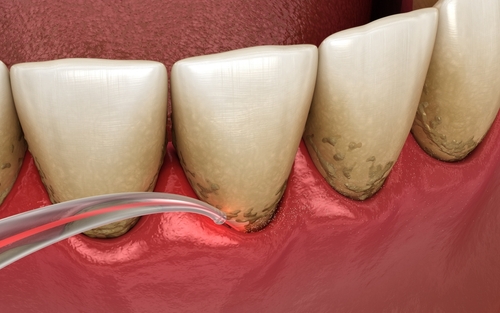 For more advanced cases, we may use our Waterlase dental laser. This innovative technology allows us to remove infected gum tissue and bacteria without cutting into your gums like traditional oral surgery does.
Waterlase uses a combination of laser energy and a gentle stream of water, so it’s precise and comfortable. It’s a modern alternative to surgery that offers great results. With laser therapy for gum disease, you get the benefit of a less invasive approach without sacrificing the outcome.
Using our Waterlase laser, we can disinfect your gum pockets, remove damaged tissue, and support healing while keeping the experience as easy on you as possible.
Extraction and Tooth Replacement
In some severe cases, a tooth may be too damaged to save. While this may sound intimidating, it may be the best for your overall gum health. And, at Carter-Rockbridge General Dentistry, we offer low-cost extractions for you and your family.
If you do need extractions, we’ll talk through all your tooth replacement options. For many patients, mini dental implants are an excellent solution. They’re a stable and long-term option, and they’re more cost-effective than traditional dental implants. They also require less bone, so they’re an ideal solution for patients who’ve lost bone due to advanced gum disease.
Even if you need an implant, your gum health still matters. Healthy gums are essential for long-term success, which is why ongoing maintenance and home care remain a big part of your treatment plan!
Get the Gum Disease Treatment Your Mouth Deserves
Gum disease doesn’t just fix itself, but with the right care, your mouth can heal! If you’re experiencing any of the signs of gum disease, no matter the stage, it’s time to act. At Carter-Rockbridge General Dentistry, we offer the most effective treatments, such as laser gum therapy, because your time is valuable, and so are you.
If you’re ready for gum disease treatment that’s honest, thorough, and personalized, schedule a free screening with Dr. Stingley today. Your gums will thank you!
Frequently Asked Questions
Laser gum disease treatment with Waterlase offers a gentler way to treat infection without the noise, pressure, and discomfort of traditional tools. Waterlase combines laser energy with a fine stream of water to target only the infected gum tissue and bacteria, leaving healthy tissue alone. This method can reduce bleeding and speed up healing.
It can even reduce the need for heavy anesthesia in many cases, which a lot of patients appreciate. Because the laser sterilizes as it works, we can lower the risk of infection and help your mouth recover more comfortably.
Taking care of your gums after treatment is all about consistency. Brushing twice a day with a soft‑bristle brush and fluoride toothpaste removes the plaque that gums don’t like. Flossing daily gets the stuff out from between your teeth where brushes can’t reach. You can also use warm salt‑water rinses if we recommend them, and stick to any prescribed rinses or antibiotics exactly as directed.
Regular checkups and cleanings also help us detect small issues before they become bigger problems. Cutting back on tobacco and sugary drinks helps too.
It’s all about teamwork: we do the cleanup, but you’ve got to keep the room tidy.
Think of it like teamwork: we’re the coaches, setting up the strategy and giving you the tools to succeed. But once you leave the office, you’re the star player. Your brushing, flossing, and follow-through are what keep the win on the board.
Your mouth isn’t separate from the rest of your body—it’s the entry point. When there’s an infection in your gums, your immune system gets involved, and that inflammation doesn’t just stay local. It can spill over and affect other parts of your body. Research has linked gum disease to systemic conditions, like diabetes, heart disease, stroke, dementia, and even pregnancy complications. The same bacteria causing trouble in your mouth can travel through your bloodstream and settle in places they don’t belong.
On top of that, things like smoking, poor diet, or high blood pressure can increase your risk for both gum disease and other chronic illnesses. So keeping your mouth clean and your gums healthy isn’t only about saving teeth; it’s about protecting your whole body.
At Carter-Rockbridge General Dentistry, we take your oral health seriously, even working closely with your health care provider to ensure the best outcomes. Remember: keeping your mouth healthy is one of the smartest things you can do for your whole body.