Perhaps you’re interested in dental implants to enhance your smile or stabilize a denture. But perhaps you’ve heard you don’t have enough healthy bone available to support implants. If you’ve been told you’re not a candidate for dental implants, or that you’d need bone grafting to become one, there’s still a path forward. Mini implants may still be an option. These smaller implants can fit into thinner jawbones. This can help you replace a missing tooth or stabilize a loose denture without bone grafting.
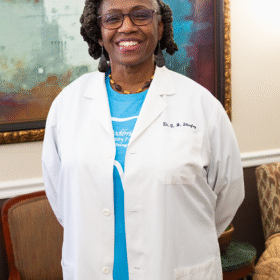
Dr. Stingley is a Norcross dentist passionate about helping patients overcome barriers to care. During a free screening, she can assess your bone structure and explain whether mini dental implants may be right for you.
Why Patients Hear They’re Not a Candidate for Dental Implants
 It’s all too common for patients to hear they’re not candidates for implants. But it can be hard to understand why conventional implants don’t work. One of the most common reasons is bone loss.
Bone Loss
Traditional dental implants are quite large, averaging 5 mm in diameter. Their larger size requires enough healthy jawbone to surround and support the implant securely. After tooth loss, the jawbone can gradually shrink in height and width. This is especially common for people who have worn dentures for years. A patient may hear they aren’t a candidate for conventional implants if their jawbone is too narrow or has lost substantial volume. Their bone density may not provide predictable support. A doctor might say you need to undergo bone grafting before you can have conventional implants.
Underlying Health Conditions
Another reason why patients hear they may not be candidates is that underlying health conditions could make treatment more difficult. The conventional implant process involves multiple visits over several months. Dr. Stingley also must make a larger incision (a flap incision) to place the larger implant, which requires more intensive healing. Between the multiple steps and larger incisions, the conventional route might not work for someone who is considered medically frail. This term refers to someone with increased vulnerability across different health categories and a higher risk of complications.
Bone loss and medical frailty are more common among older adults. Despite this, Dr. Stingley strongly recommends dental implants for our elderly patients who have lost bone. That’s why she’s passionate about mini dental implants, which may suit patients with bone loss or underlying health conditions.
Here’s How Mini Dental Implants Make a Difference
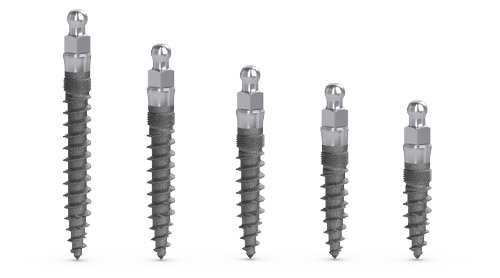
For many patients, mini implants offer a simpler approach. They are much smaller than conventional dental implants, measuring less than 3 mm in many cases, so they fit into areas with smaller jawbones. In many cases, mini implants don’t require bone grafting!
Another significant difference is that mini implants involve a much faster, less invasive placement process. To place a mini implant, Dr. Stingley punches a small hole in the gums and gently secures the post into the jawbone. While the conventional process takes multiple visits over months, placing a mini implant can often be completed in just one visit. Dr. Stingley can place a mini implant in an hour, in many cases. She finds that patients recover more comfortably from the less invasive process. This makes mini implants an option for some patients with more complex health needs.
Dr. Stingley has supported many patients who are now more confident because their dentures feel more secure.
Learn More at a Free Screening
Being told you’re not a candidate for dental implants can feel discouraging, especially when missing teeth or loose dentures make eating difficult. Mini implants may offer another option, even if you’ve lost bone. Their smaller diameter lets them fit into narrower areas of the jaw, greatly reducing the need for bone grafting.
Dr. Stingley believes you should be able to eat, speak, and smile with greater comfort and confidence. Through the experience she has gained during her 30 years of restorative dentistry, she wants to renew your smile and bring back its intended function. She makes it easier to say yes to mini implants by offering free screenings for patients who move forward with treatment. Schedule your visit today.